
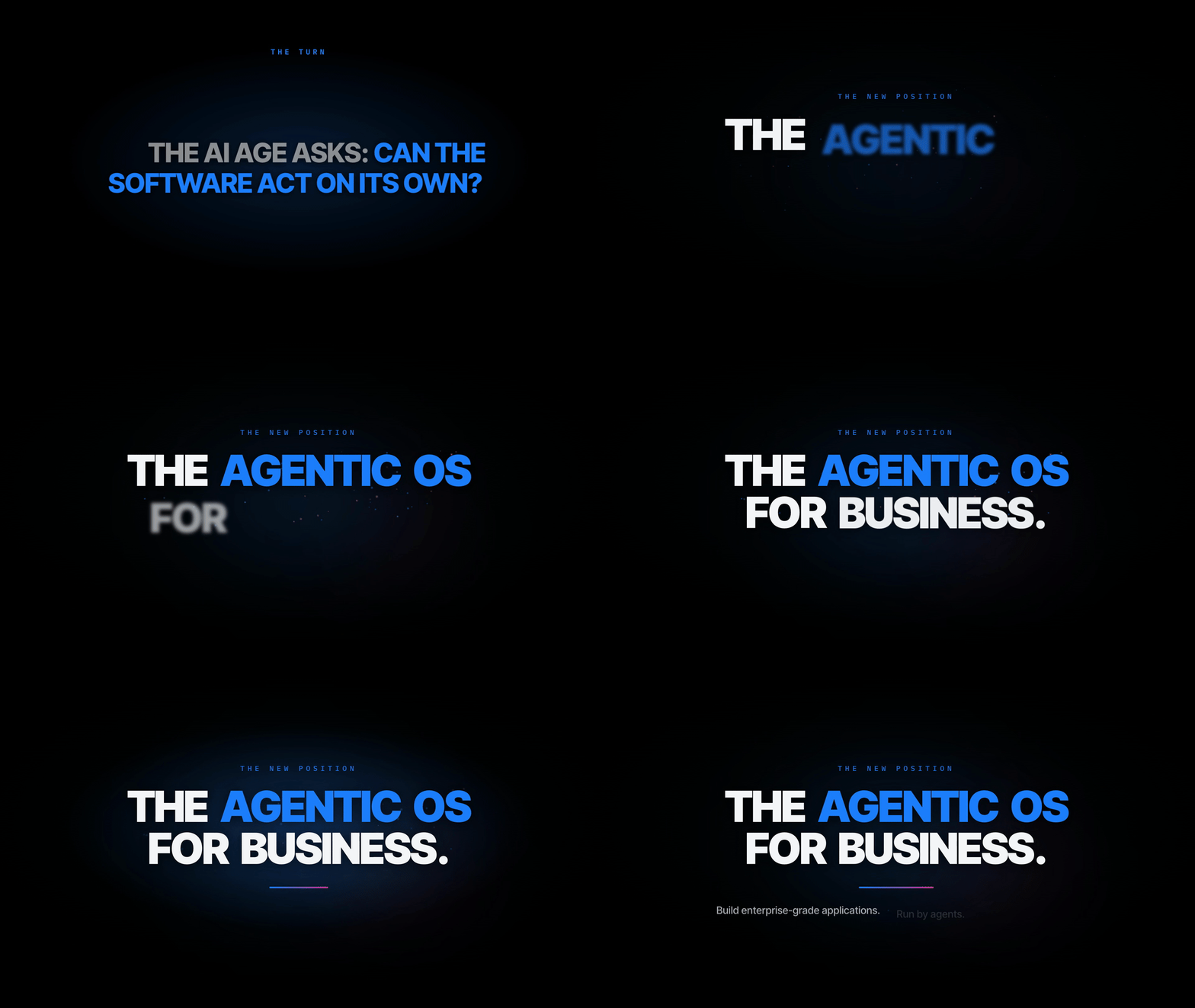
Our marketing team ran a contest, company-wide. The brief was unusually honest: stop reviewing our own website and start roasting it. Pick a character, land on the homepage, and say the thing a real visitor would think but never email us. A small group had done it one morning and laughed hard enough that they opened it to the whole company.
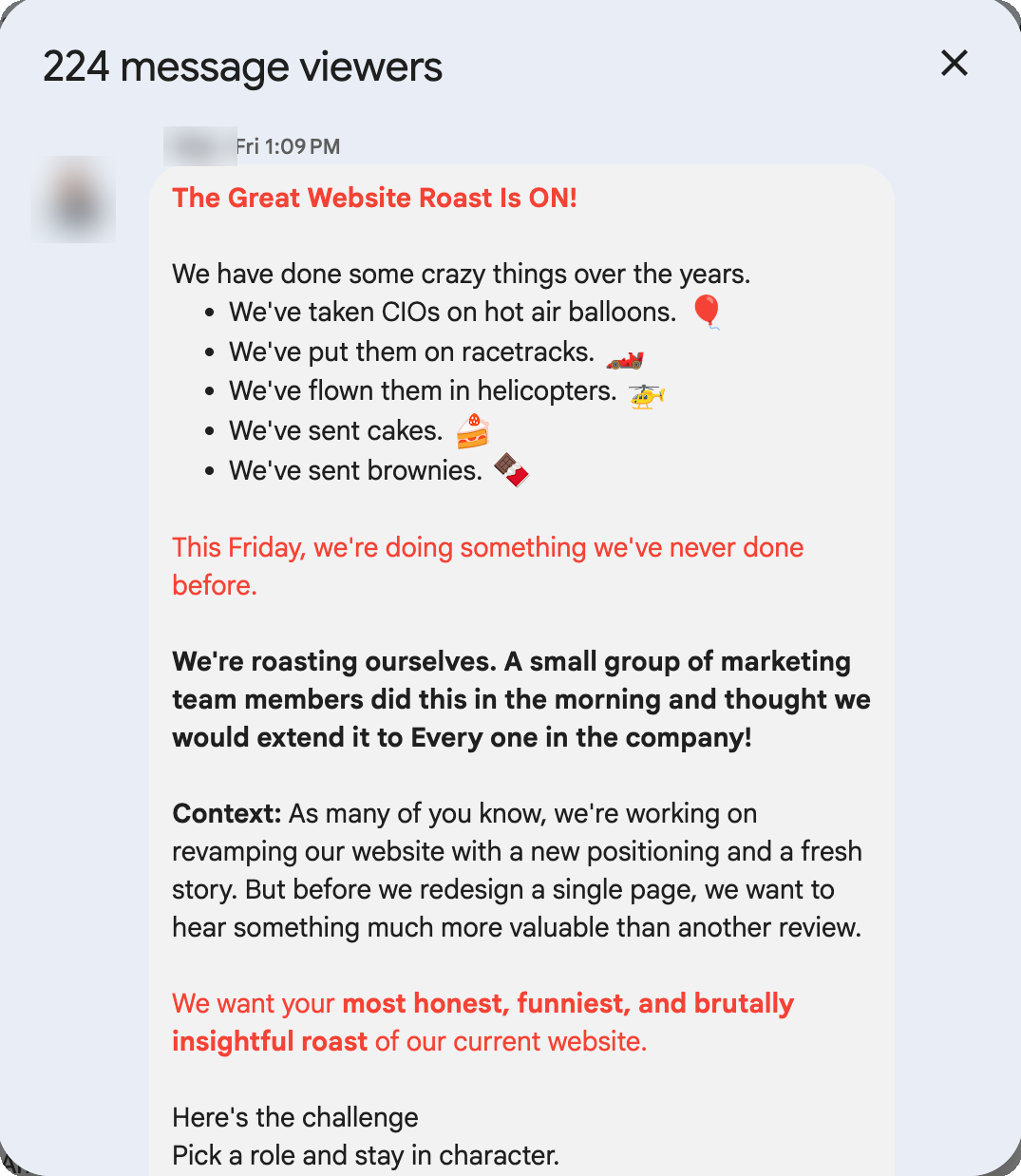 The actual brief that kicked it off. Names masked, the dare was real.
I am a documentation manager, not an engineer. I do not ship the product. But I read for a living, and the one thing a reader cannot forgive is not knowing where they are. So I took the bait. I opened the site like a stranger with a budget and a short attention span, and I tried to answer one question. What is this?
I could not. Not because the writing was bad. Because the site had not decided. One page spoke one language, the next page spoke another, and a careful visitor was left holding four half-answers and no whole one. I wrote it up, had a good laugh, and then a quieter thought arrived and would not leave. This was not a wording problem. It was a deciding problem. And deciding, it turns out, is the part nobody wants to do.
The roast wrote itself
Here is the uncomfortable thing about looking at your own work as a stranger. The flaws are not hidden. They are sitting in plain sight, protected only by the fact that everyone who works there already knows what the company means, so nobody reads the page cold anymore. Familiarity is a kind of blindness. The roast was easy because I made myself forget.
Rather than itemise a colleague’s hard work in public, I will keep the specifics in the family. The shape of it is what matters, and the shape is universal. A platform that does many things gets described many ways, once per team that owns a page, and the descriptions quietly compete instead of combining. Each one is true. Together they cancel out. The visitor does not get a richer picture. They get a blurrier one.
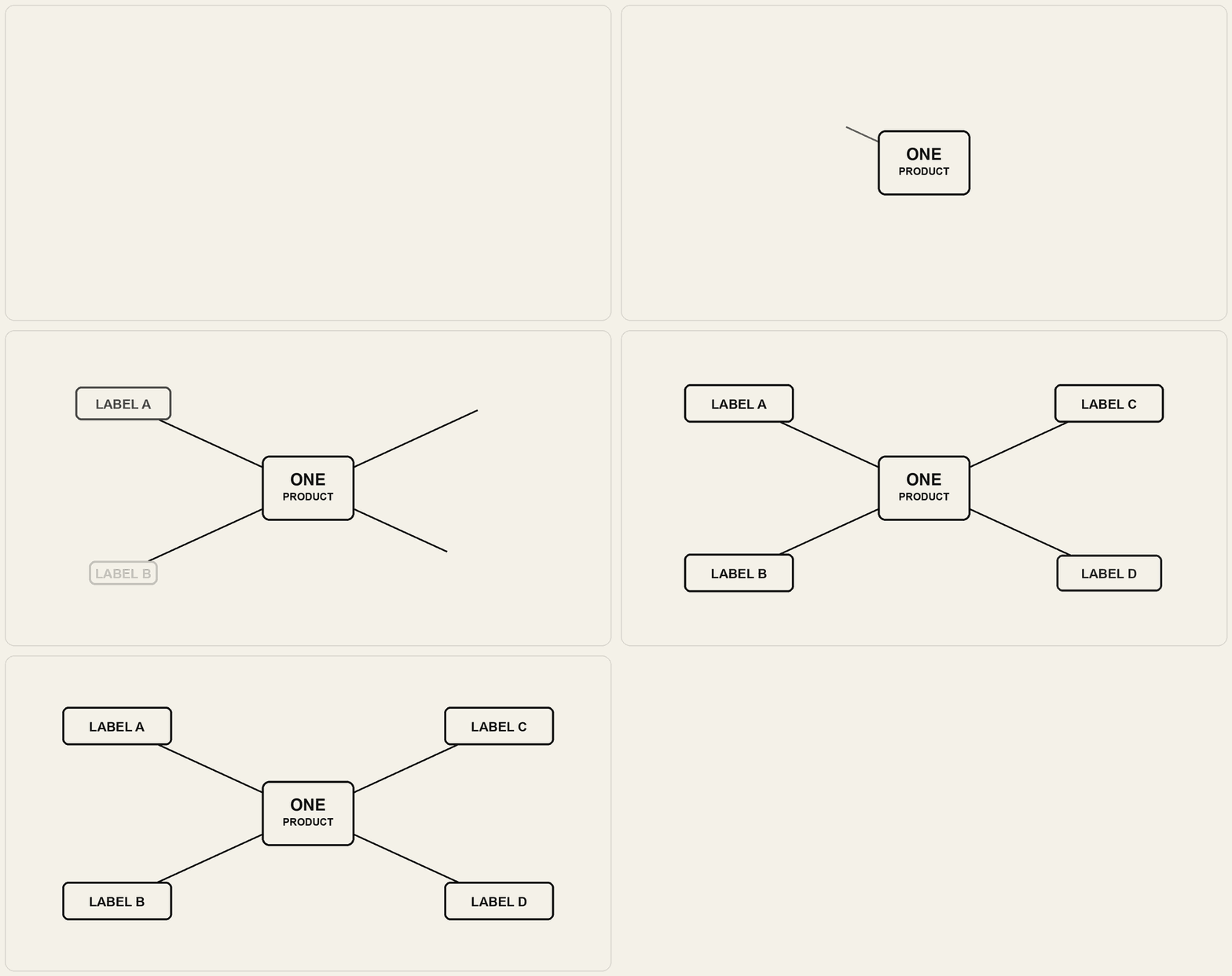 Four true labels, pulling four ways. Each one is correct. Together they read as confusion.
I have lived this from the inside, so I am not throwing stones. Documentation has the same disease in a different outfit. Ten writers describe the same feature ten reasonable ways, and the reader pays for our refusal to pick one. The website just made the cost visible, on the front door, in marketing font.
! A thing described four ways is not four times as clear. It is a quarter as clear, and twice as tiring to read.
Roasting is cheap. Rebuilding is the tell
A roast with no follow-through is just complaining with better timing. The real revamp belongs to the marketing team, not to me. I sit in documentation, well outside that call, and nobody asked me to redraw their homepage. But the contest was open to everyone, so I gave myself a harder version of the assignment. Do not tell them what is wrong. Show them what right could look like. By the weekend I wanted a real homepage, not a slide. Something a person could open in a browser and click.
I cannot hand-write that. What I can do is direct it. I work with AI tools the way a documentation lead works with a room of fast, literal contributors. I decide, they execute, I check. The building was genuinely the easy half. I described a dark stage, a single living mark made of brand-colored light, one category line, and the AI produced a working, animated site. When I asked for proof and trust sections it built those too.
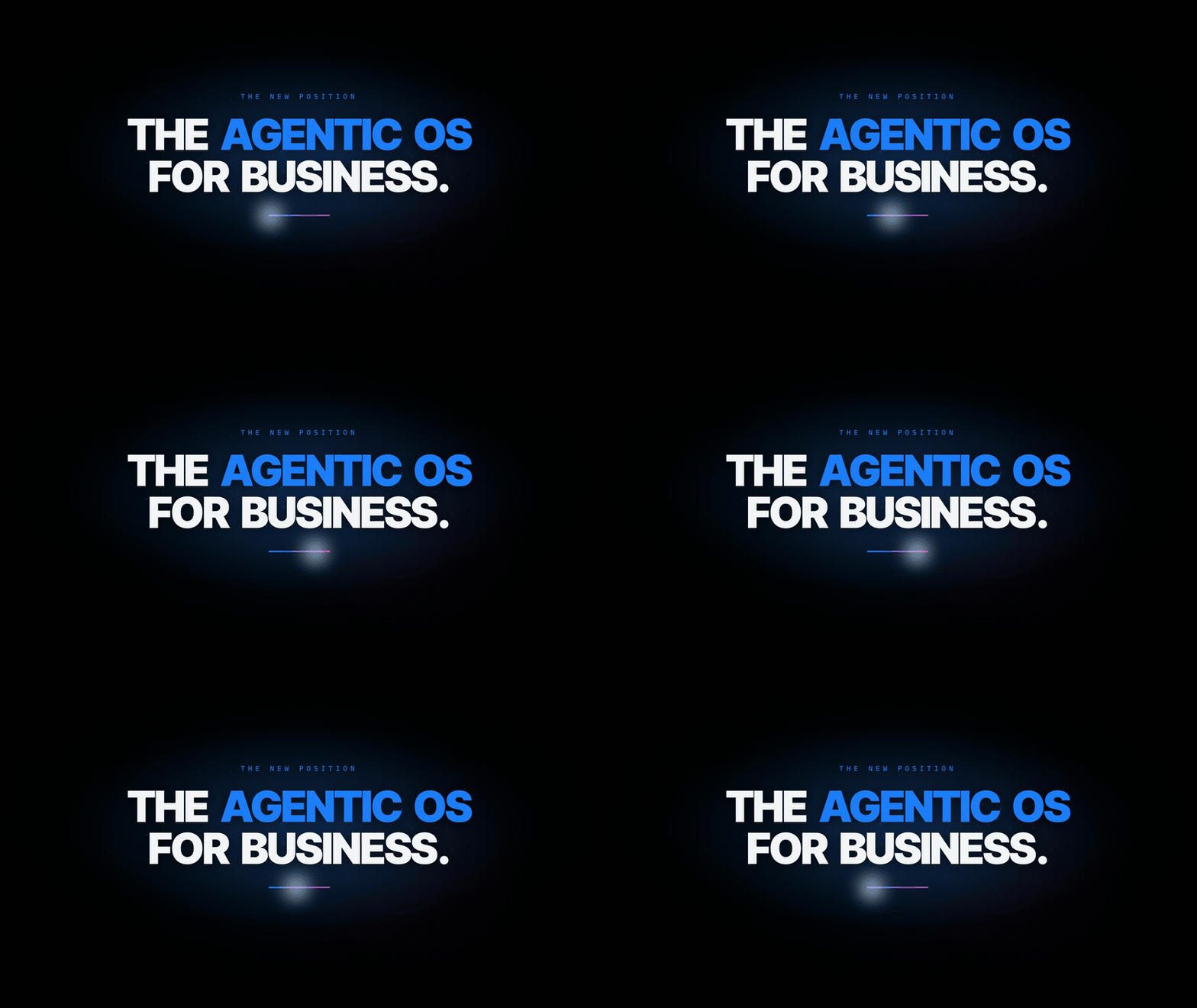 One category. One sentence. The whole rebuild was an argument for picking a lane.
The speed was almost a trap. When a tool can build anything in minutes, the bottleneck stops being effort and becomes judgment. I could generate ten heroes before lunch. Choosing one, and killing the other nine without flinching, was the actual work. Every time I stalled, the project stalled with me, and it was never because the AI was slow.
When building gets cheap, deciding becomes the whole game.
This is the part that maps to Federer
There is a stat I keep coming back to. Across his career, Roger Federer won almost half his matches while winning barely more than half the individual points. The points are nearly a coin flip. The matches are not. The difference is not effort on every point. It is judgment on the few that decide the set.
A weekend rebuild runs on the same math. Hundreds of small choices barely move the result. A handful decide everything, and they are almost always decisions, not tasks. What is this one thing? What gets cut so the one thing can breathe? When do I stop polishing a section that was already good enough an hour ago? Win those few and the ordinary points take care of themselves. Lose them and no amount of pretty animation saves you.
 Most choices are coin flips. A few are the match. Spend your nerve on those.
The mistakes were not the disaster
I want to be honest about the middle, because the clean version is a lie everyone tells. It did not go smoothly. The deploy broke on a setting I had wrong. A batch of my AI contributors quietly did nothing and reported success, so I had to notice the silence and send them back. Text from three sections stacked on top of itself and made the page look like a ransom note. A cache corrupted right before the final render.
None of that was the disaster. The disaster would have been treating any one of them as proof the whole idea was bad. A setback at hour nine feels like a verdict. It is almost never a verdict. It is a task with a bad attitude. The move is to fix the one broken thing and protect the decision you already made, instead of reopening the whole case every time something snags. Catastrophising is just indecision wearing a costume.
! A broken deploy is a task. Deciding the project is doomed because the deploy broke is a mistake. Keep those two apart and most bad days get a lot shorter.
What the AI age actually changes
Here is the larger thing the weekend taught me, and it is bigger than one website. For years our category described how the work got made. Faster tools, fewer steps, less code. That was a real answer to a real question. But the question is changing. The new one is not how fast a person can build. It is whether the software can act on its own, safely, inside a business that has rules.
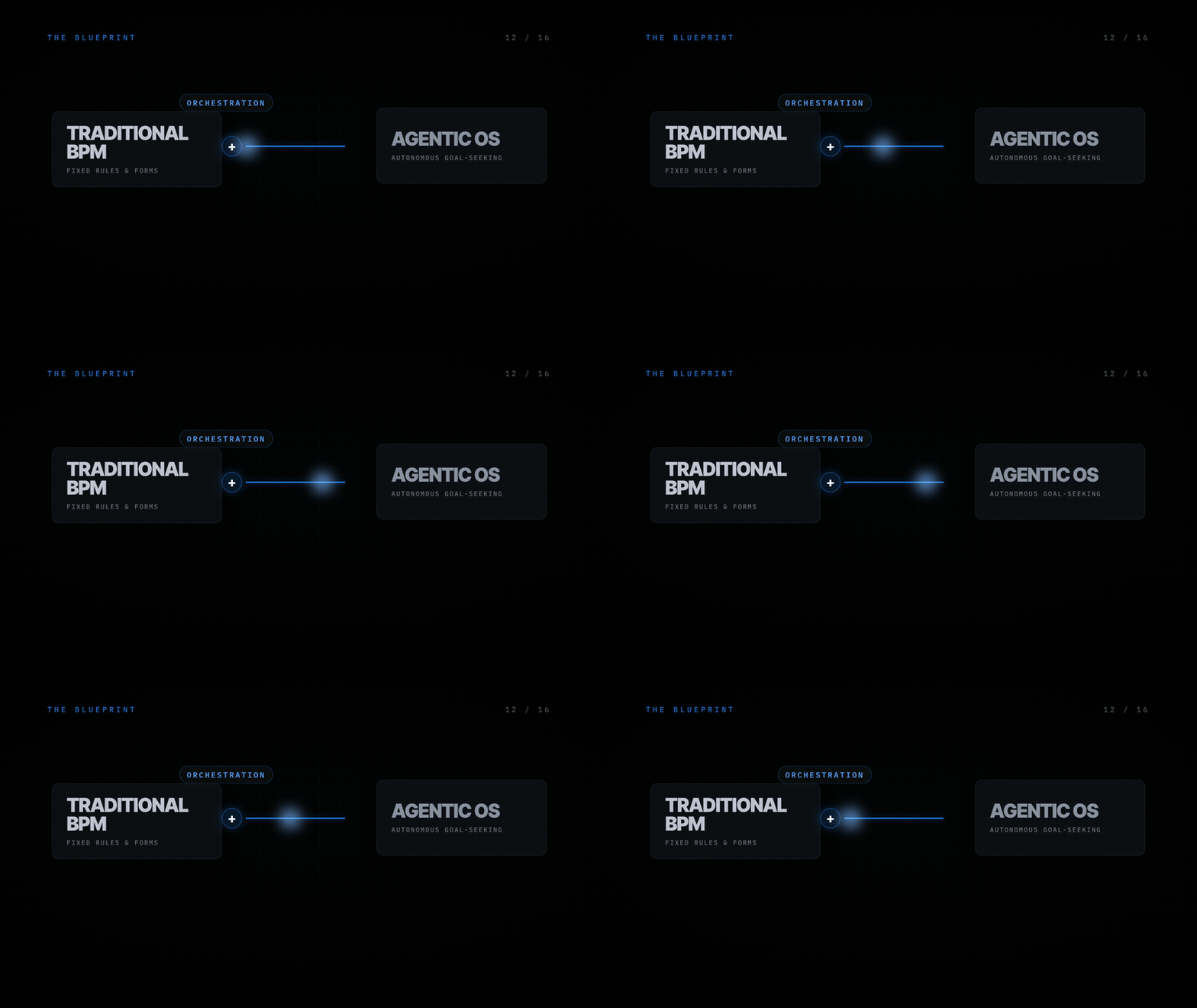 The argument in one frame. The boring, structured foundation is exactly what an agent needs to act without breaking things.
The irony I enjoyed most is that the unglamorous parts turned out to be the advantage. Rules, permissions, structured data, audit trails. The stuff nobody puts on a banner is precisely the body an autonomous agent needs so it can act without doing something expensive and irreversible. A model can think. It cannot be trusted to act inside a company until something deterministic is holding the guardrails. The old, careful foundation is not the thing to apologise for. It is the thing to lead with.
But you only get to make that argument if you decide to make it. The whole exercise kept rhyming with itself. The original sin was four answers to one question. The fix was not better words. The fix was the nerve to choose one answer and let the page be quiet about everything else.
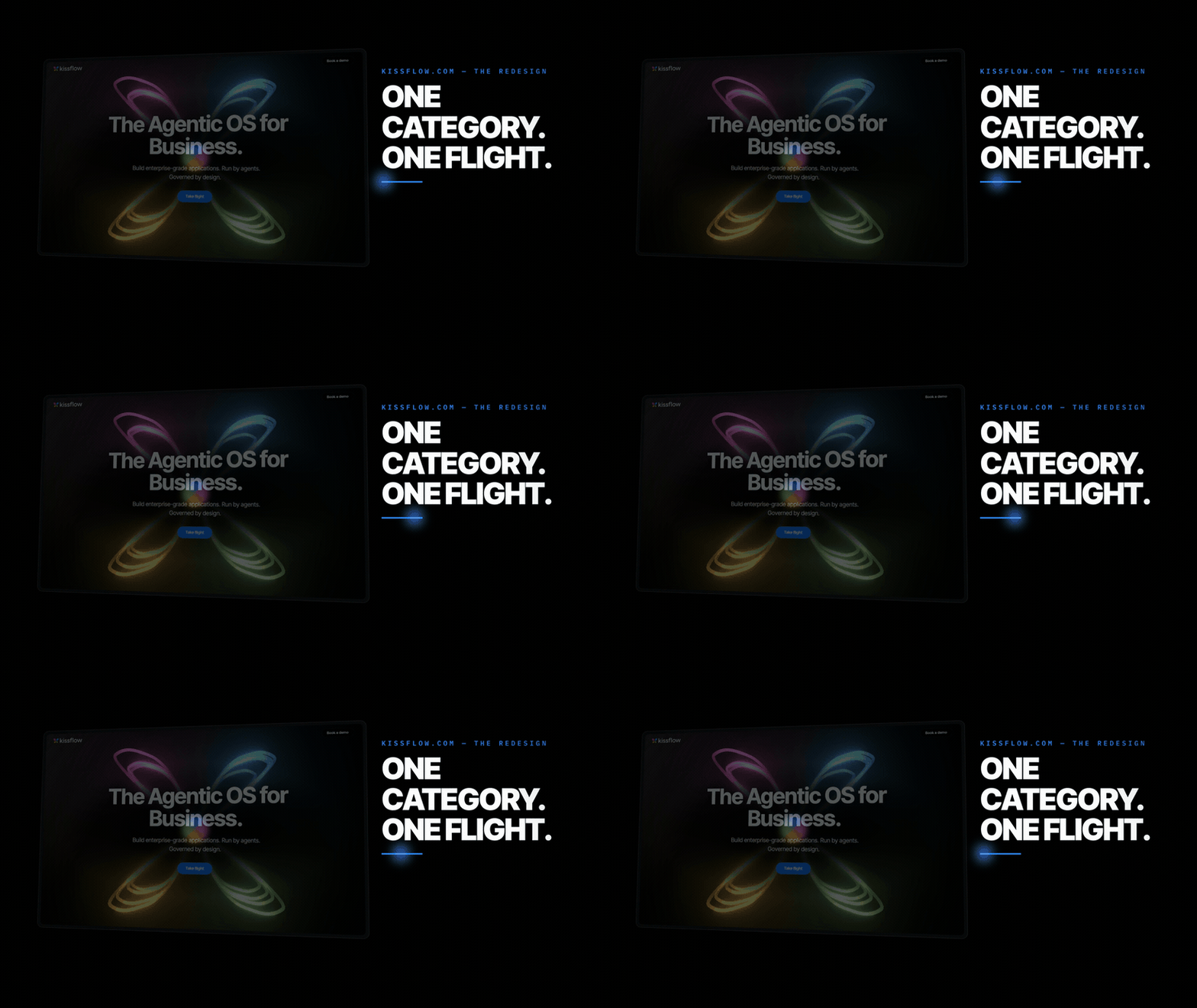 My weekend rebuild, not the shipped site. Not because the design is clever. Because it picked one thing and meant it.
What I am taking back to the day job
I did not set out to learn anything. I wandered into another team’s contest to win it with a joke. But the lesson followed me back to the work I actually get paid for, which is not theirs and not this. Documentation is positioning at a smaller scale, one page at a time. Every help article is a tiny version of the same test. Did we decide what this page is for, or did we hedge and let the reader sort it out?
The tools will keep getting faster. Mine already build in minutes what used to take a week. That does not make the work easier. It moves the work. The scarce thing is no longer the making. It is the deciding, and the nerve to defend a decision through a few ugly hours without reopening it every time something breaks.
So I am keeping the roast pinned where I can see it. Not as a dunk on a website. As a reminder that the most expensive bug I will ship this year will not be a typo or a broken link. It will be the moment I had four good answers and could not bring myself to choose one.
Pick the answer. Cut the other three. The page, and the reader, will thank you for the silence.
Built over a weekend with AI tools, a documentation manager’s stubbornness, and one good contest brief. The roast was the fun part. The deciding was the point.